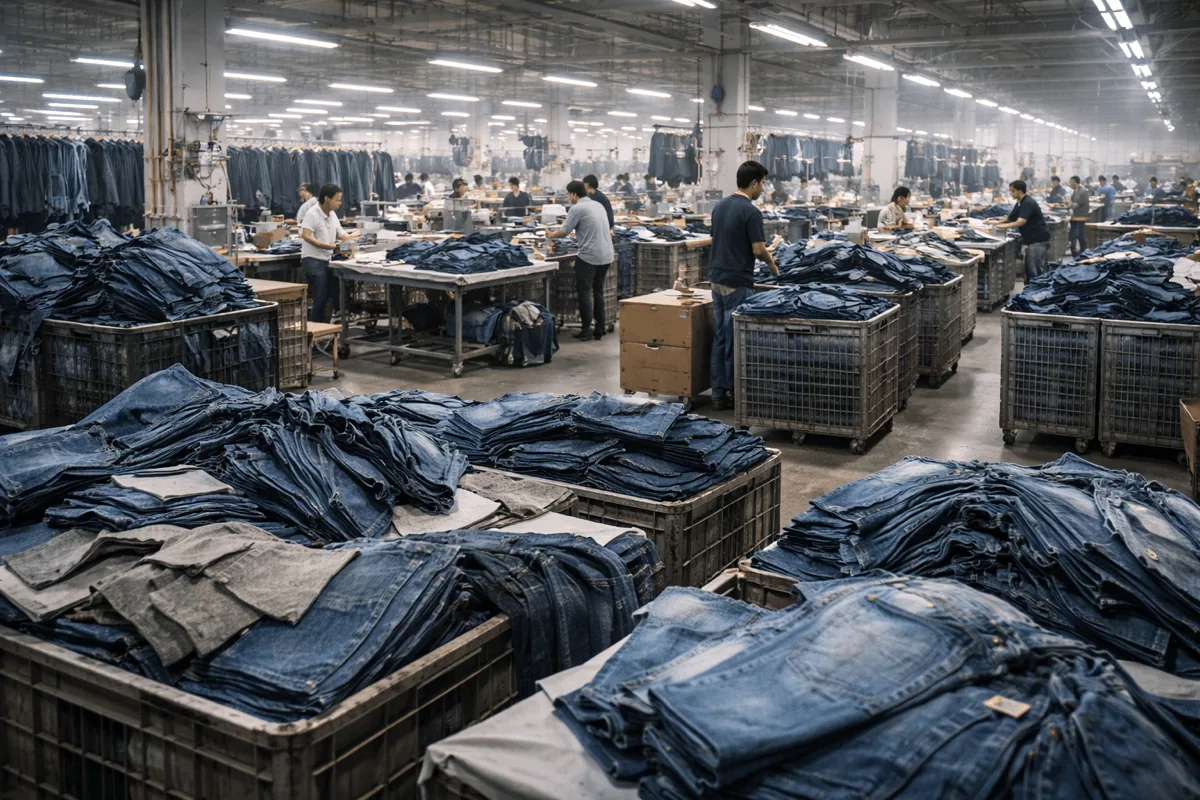
When work is conducted remotely, maintaining stable quality is particularly challenging, and inspecting every single item is time-consuming and expensive.
This is where AQL (Acceptable Quality Level) comes in — an international standard for sampling inspections. It translates discussions about quality from subjective “like/dislike” into clear numbers and rules.
"AQL translates quality into a language of numbers and transparent rules."
Why AQL Is Needed
AQL allows brands to turn abstract notions of product quality into measurable indicators. Instead of arguing over “like/dislike,” both the brand and the factory receive clear criteria for evaluating a batch. This saves time and money, reduces disputes and returns, and makes inspections faster and more manageable.
With high volumes, production becomes predictable — which defects are acceptable and which require intervention.
Benefits of using AQL for both client and manufacturer:
- A common "quality language" recognized worldwide (ISO 2859-1)
- Clear defect criteria: Critical, Major, Minor
- A defined sampling plan: how many items to inspect per batch
- Fast and cost-effective inspections without 100% checks
- Fewer disputes and returns — quality requirements agreed in advance
How AQL Inspections Work
AQL inspection begins with preparation: first, the batch size is determined and the inspection level is chosen, usually Level II — standard. Then the sample size is calculated, after which QC inspectors thoroughly check each item in the sample and classify any defects by severity.
Defects are divided into three categories:
- Critical — dangerous, unusable
- Major — serious, affecting appearance or functionality
- Minor — minor, not affecting usability
"Critical defect = 0%, Major defect = 2.5%, Minor defect = 4.0% (typical values for mass-market production)"
Example: A batch of 2,000 jackets, 315 are inspected. At AQL 2.5%, a maximum of 14 major defects is allowed. Exceeding this number results in batch rejection.
Inspection focuses on:
- Sizes (per specifications)
- Color and match with sample
- Sewing quality (seams, stitches, threads)
- Hardware (buttons, zippers, rivets)
- Cleanliness and absence of stains
- Labels and tags
- Packaging
Inspections are conducted at these stages:
- During Production Inspection (DPI) — in-process (20–30% complete)
- Pre-Shipment Inspection (PSI) — before shipping (80–100% complete)
- Loading Supervision (LS) — container loading control
Choosing the Right AQL
The AQL level depends on the product category and brand segment. Critical defects are always 0%, as they make the item unusable. Major defects may be allowed up to 2.5% for mass-market products, but for premium and children’s lines, this is reduced to 1.5% to ensure high quality. Minor defects are allowed up to 4% for mass-market products and 2.5% for premium/children’s products.
Category values:
- Critical — always 0.0%
- Major — 2.5% (mass-market), 1.5% (premium/children)
- Minor — 4% (mass-market), 2.5% (premium/children)
Documenting Results
After inspection, it is crucial to document results properly to avoid disputes and ensure transparency for all parties. Each defect is recorded with photos and videos for evidence. A report is created showing the number of items inspected, defect counts by category, and the final decision: "Accept / Reject."
All decisions regarding rework, returns, or discounts are documented so both the client and manufacturer have clear information about the finished products.
Common Brand Mistakes
Clients often make repeated errors when working with AQL, leading to batches that do not meet requirements and extra costs. Common problems arise when AQL is not included in contracts, checklists per product category are missing, or inspection occurs only after production is complete.
"AQL disciplines the process, reduces return rates, and allows the client and factory to work by unified rules."
Conclusion
AQL is not just a table of defect percentages. It is a tool within the quality control system that protects the brand, saves resources, and reduces the risk of production errors.
It is important to understand that AQL is only one element of control. It cannot be relied on exclusively: in practice, a combination of AQL, in-process inspections, final inspections, and proper production planning is used.
For small batches, inspecting every item is relatively simple, and AQL is less effective — manual sampling or full inspection may suffice. For large batches — tens of thousands of items — checking each unit is time-consuming and costly. In these cases, AQL allows predetermined defect levels and systematized control, making processes predictable and transparent.
When implemented from the start, with properly defined defect limits, contractually fixed levels, checklists, and agreed inspection procedures, AQL enables the brand to anticipate potential issues and costs in advance.
Related articles
Fabric as a Carrier of Function: Where the Textile Industry is Heading
For many years, the choice of fabric for clothing production was based on conventional parameters.

Recycled Materials in Apparel: A Trend or the New Reality?
In 2026, recycled materials have definitively moved beyond being just a marketing tool for major brands.

How to Launch Clothing Production in China
China has long been the center of global clothing manufacturing. Many companies aim to launch production there efficiently, but they often face unexpected challenges.