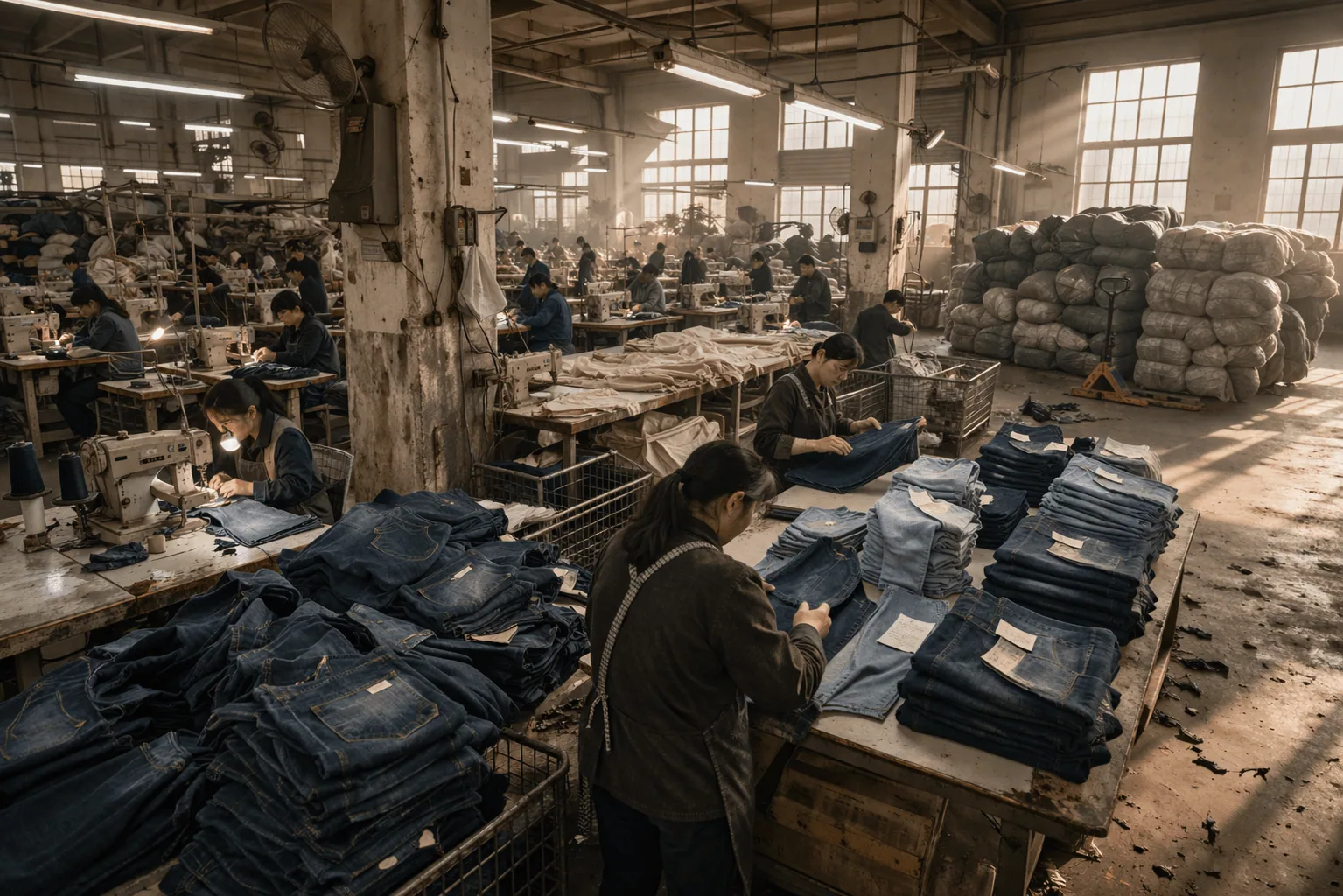
MOQ (Minimum Order Quantity) is the minimum order volume that a factory is willing to accept for production.
For brands planning clothing production in China, this is one of the key parameters. MOQ directly affects product cost, factory selection, and quality stability.
In practice, MOQ determines which type of production you will work with — a large factory or a smaller workshop — and what result you will ultimately receive.
In this article, we will examine how minimum order quantities work in China, what they depend on, and how to manage them at the start of a brand.
"MOQ in China is not a formality or just a line in communication with a factory. It is one of the parameters that immediately reflects the economics of the model, the level of production, and the realism of the task."
What is MOQ and how it works in China
MOQ is not a fixed number. It is a variable that depends on several factors:
- product type
- design complexity
- materials used
- factory workload
- level of production automation
In China, there is a simple logic: the larger the volume, the cheaper the production and the more stable the quality. This is because large factories operate with production flows. They have lines, equipment, and standardized processes, and it is economically efficient for them to run batches of several hundred or thousands of units.
Smaller volumes, on the other hand, are usually handled by smaller production facilities. These rely more on manual labor, have less automation, and depend more on individual workers.
How MOQ affects price
The cost of a product in China is always calculated based on volume. The same model can have different prices depending on the batch size:
- 100 units — high cost
- 300–500 units — medium level
- 1000+ units — lowest price
The difference can reach up to x2 between small and large batches. This is especially noticeable in basic products such as T-shirts, hoodies, jeans, and sportswear. The simpler the product, the stronger the scale effect.
For small volumes, factories include manual labor, defect risks, and inefficient production loading in the price. This is why small batches are almost always more expensive.
MOQ depending on the type of clothing
Minimum order quantities vary significantly depending on the category.
Basic clothing (T-shirts, hoodies, sportswear, underwear):
- typically from 200–500 units and above
- mass production factories
- strong dependence on volume
Underwear and socks:
- largest volumes
- high level of automation
- MOQ often starts from several thousand units
Complex garments (coats, jackets, suits):
- possible from 50–100 units
- higher quality control requirements
- more manual work
Small production volumes in China: reality and limitations
Many companies want to start with small batches. This is possible, but it is important to understand the limitations. Small volumes always mean a higher unit price, limited factory options, and increased quality control requirements.
At the same time, there is an advantage: smaller batches allow for more attention to detail and product refinement. However, this only works with proper process management.
"A small volume is not a problem in itself. The problem begins when a brand wants a small batch, low price, and mass production stability at the same time."
How I work with MOQ in practice
I initially built my workflow for brands that do not need thousands of units at the start.
"My baseline reference is from 100 units per model."
This applies to most clothing categories: sweaters, hoodies, jeans, outerwear. The exception is underwear and highly mass-market products, where production economics are different.
It is important to understand: this is not the minimum requirement of factories in China — this is a working volume for the client that allows achieving a predictable result.
"At the start, the important thing is not the minimum possible volume, but the volume that allows you to achieve a predictable result. That is why the working MOQ for a brand and the formal minimum of a factory are not the same."
How MOQ changes depending on the segment
MOQ can be conditionally divided by market segment:
- mid-level brands — from 100 units per model
- higher-end niche brands — from 50–100 units
- mass market — from 500–1000+ units
Is it possible to produce below MOQ
Yes, it is possible to work with smaller volumes, but in this case the price per unit will be higher, factory options will be limited, and quality control becomes critical.
Such orders make sense for product testing, capsule collections, or niche brands. However, this is always a compromise between price, volume, and risk.
Why MOQ is not just a number
MOQ is not about “the minimum you can order.” It is the point where production economics, factory capabilities, quality level, and the client’s objectives intersect.
Therefore, MOQ should always be considered in relation to the task, not as a standalone parameter.
"MOQ is not just about quantity. It is the point where price, quality, risk, and the brand’s maturity meet."
Conclusion
Minimum order quantities in China are one of the fundamental tools for managing production.
For most brands, the practical balance starts from around 100 units per model. There is strong demand in this segment, but few are willing to operate in it, as it requires deeper involvement, tighter control, and more hands-on process management.
As a specialist, I have built a working system of interaction with factories, fabric suppliers, and production teams in a way that allows such orders to be executed consistently. This requires greater attention to detail and continuous control, but the processes are already established and ensure predictable results.
I proceed from the understanding that China is not only about large volumes. It is possible to produce high-quality products in small batches here if the workflow is properly structured. Therefore, it is not worth limiting yourself with the stereotype that China is only suitable for mass production.
Related articles

Recycled Materials in Apparel: A Trend or the New Reality?
In 2026, recycled materials have definitively moved beyond being just a marketing tool for major brands.

How to Launch Clothing Production in China
China has long been the center of global clothing manufacturing. Many companies aim to launch production there efficiently, but they often face unexpected challenges.
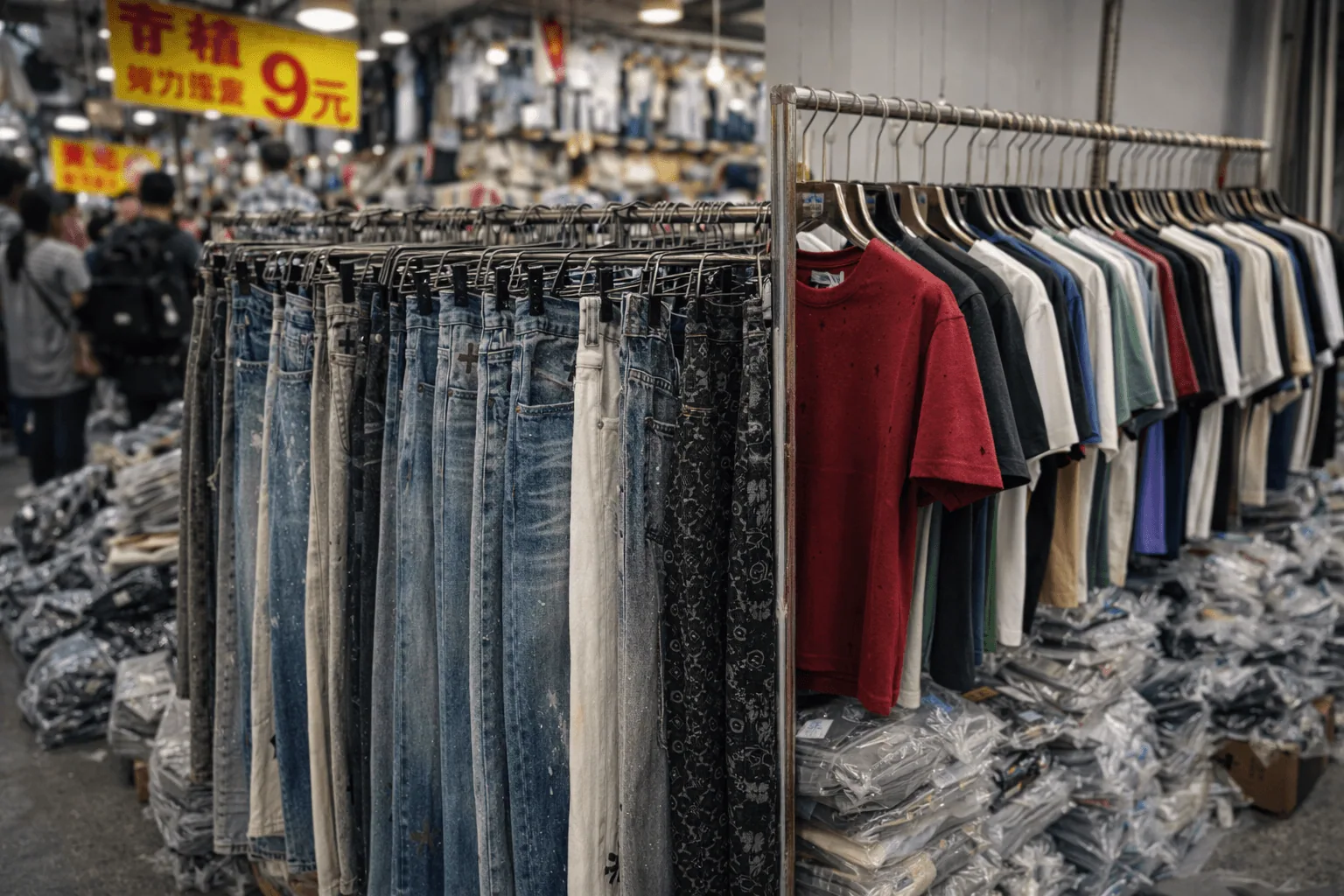
Buying Ready-Made Clothing in China vs Manufacturing
Buying ready-made clothing is a separate tool with its own limitations, risks, and objectives.